3-way matching is an important purchasing and accounting control that helps Malaysian businesses verify supplier invoices before making payments. By comparing a Purchase Order (PO), Goods Received Note (GRN) and supplier invoice, companies can identify discrepancies in quantities, prices and delivered goods.
For growing SMEs, managing purchases involves more than placing orders with suppliers. Finance teams must confirm that the company received the correct items, that the charges follow agreed terms and that invoices are properly reviewed before payment approval. This guide explains how the matching process works, why it matters and seven essential checks that businesses can introduce into their procurement workflow.
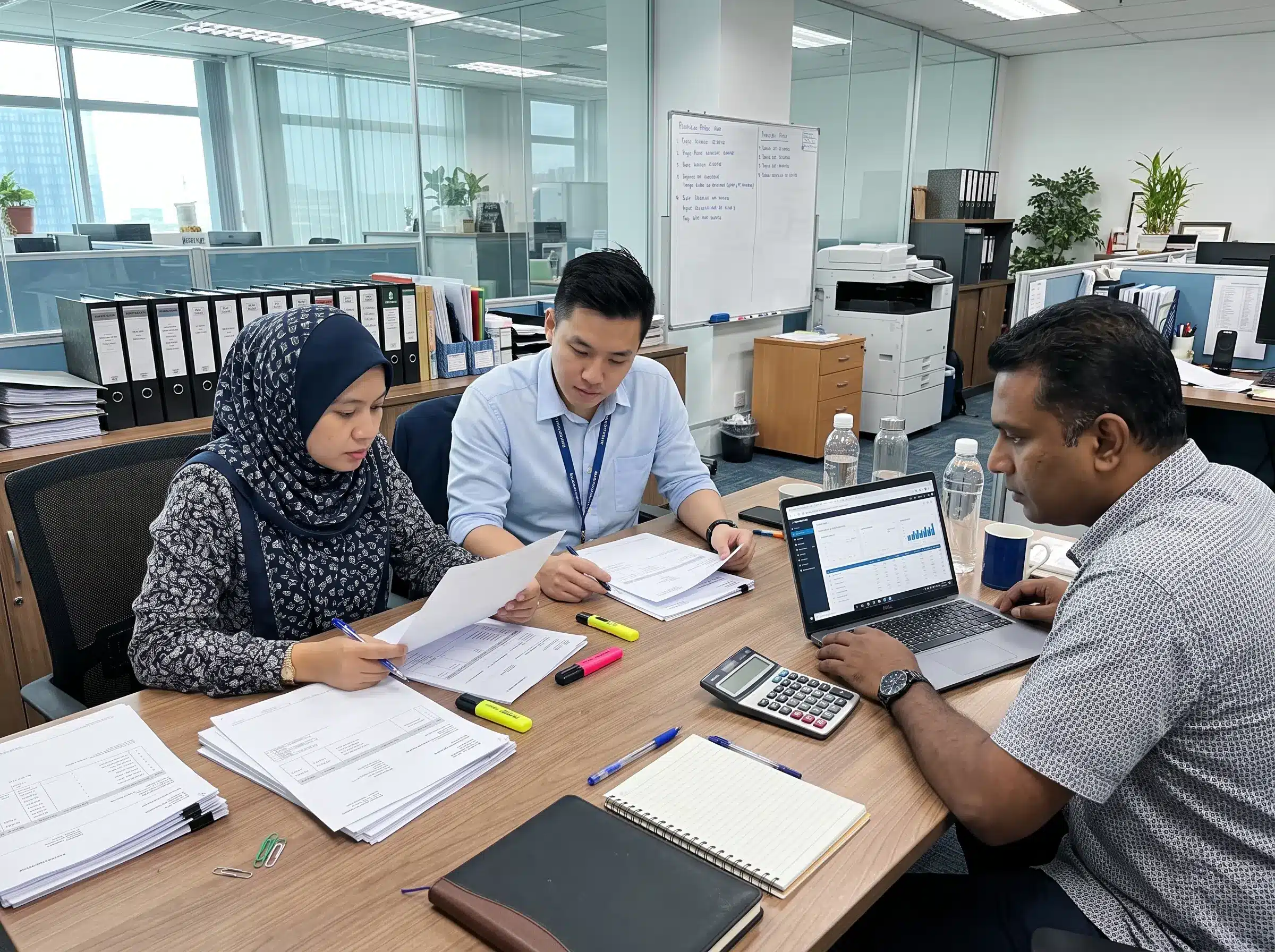
What Is 3-Way Matching in Procurement?
3-way matching is a verification process used by procurement and accounts payable departments to compare three important purchasing documents before approving a supplier invoice for payment.
The process helps answer three questions: What did the company order? What did the company actually receive? What is the supplier charging? When these records agree, the invoice can proceed through the company’s normal approval process. When they differ, the relevant staff should investigate the discrepancy.
Document 1: Purchase Order (PO)
A Purchase Order records the goods or services requested from a supplier. It normally contains item descriptions, quantities, agreed unit prices, payment terms and delivery information. This document establishes what the buyer has authorised.
Document 2: Goods Received Note (GRN)
A Goods Received Note confirms the items and quantities physically received by the company. It may also record damaged goods, missing quantities and delivery discrepancies. Some inventory systems use receiving vouchers or similar records to document this stage.
Document 3: Supplier Invoice
The supplier invoice specifies the amount requested for the delivered goods or completed services. Finance staff compare its quantities, prices, charges and payment information against the approved order and receiving record.
Example of 3-Way Matching for a Malaysian SME
Consider a Malaysian wholesale company purchasing 100 units of an electronic accessory from a supplier. The agreed unit price is RM25, giving a purchase order value of RM2,500 before any additional charges or applicable taxes.
| Document | Quantity | Unit Price | Amount |
|---|---|---|---|
| Purchase Order | 100 units | RM25 | RM2,500 |
| Goods Received | 92 units | RM25 | RM2,300 |
| Supplier Invoice | 100 units | RM25 | RM2,500 |
Discrepancy Identified: RM200
The supplier invoiced 100 units, but the warehouse recorded only 92 units received. The difference is 8 units, equivalent to RM200 at the agreed price. Finance should confirm whether the remaining goods are still in transit, were rejected or require an invoice adjustment before approving the billed amount.
Without a proper comparison, the company might overlook this difference and pay for goods that have not yet been accepted. The purpose of 3-way matching is to make discrepancies visible and support a documented purchasing decision.

7 Essential Checks in the 3-Way Matching Process
1. Verify the Approved Purchase Order
Begin with an approved Purchase Order containing accurate supplier information, item descriptions, quantities and agreed pricing. Finance should confirm that the supplier invoice refers to a legitimate purchasing transaction.
If the purchasing team changes an order after approval, the revised terms should be properly recorded. Unauthorised changes may cause confusion when the supplier invoice arrives.
2. Confirm the Actual Goods Received
Warehouse employees should verify the products physically received and record the accepted quantities accurately. Missing, excess or damaged items should be documented before the receiving record is finalised.
For businesses managing multiple deliveries, each receipt should clearly reference the relevant purchasing transaction so finance staff can identify which items have arrived.
3. Compare Supplier Invoice Details
Review the supplier invoice against both the approved PO and receiving record. Important details include supplier name, item descriptions, reference numbers, invoice date, quantities and agreed payment terms.
A company should also check whether the invoice has already been entered or paid. This additional control helps reduce the risk of duplicate processing.
4. Check Unit Prices and Total Amounts
The price billed by the supplier should agree with the agreed purchase price, unless an authorised revision has been recorded. Even a small difference per unit can become significant when the company purchases large quantities.
For example, a RM2 price difference across 500 units represents an additional RM1,000 in purchasing costs. Businesses should define who can approve such differences and how they are documented.
5. Identify Partial Deliveries and Returns
Not every purchase order is delivered in one shipment. Suppliers may send goods in multiple batches, while some products may be rejected or returned after inspection.
A practical 3-way matching process should distinguish between ordered quantities, accepted quantities, outstanding deliveries and previously invoiced items. This is particularly important for wholesalers, distributors and manufacturing-related businesses.
6. Review Taxes, Discounts and Additional Charges
Invoice totals may include shipping charges, discounts, taxes or other agreed costs. These amounts should be reviewed separately from the basic item price and quantity comparison.
Finance teams should verify that the charges are supported by purchasing terms and that any applicable tax treatment is reviewed appropriately. An invoice should not be approved simply because its total appears close to the purchase order value.
7. Document Approval Before Supplier Payment
The final check is ensuring that any differences have been investigated and approved by an authorised employee before the company proceeds with payment.
A clear approval record provides accountability and helps finance teams explain purchasing decisions during internal reviews or audits. The process should identify who reviewed the documents, what discrepancies were found and how they were resolved.
Manual vs System-Assisted 3-Way Matching
Small companies may begin with spreadsheets, printed purchase orders and manual invoice checks. This approach can work when transaction volumes are low, but becomes harder to manage as the number of suppliers and deliveries increases.
| Area | Manual Process | ERP-Assisted Process |
|---|---|---|
| Document tracking | Separate files and spreadsheets | Centralised purchasing records |
| Goods receiving | Paper forms or manual entries | Digital receiving records |
| Invoice verification | Manual document comparison | Related records available for review |
| Payment tracking | Separate payment files | Purchase invoice and payment records |
ERP-assisted verification does not necessarily mean that every discrepancy is detected or blocked automatically. Businesses should review the actual capabilities and settings of their chosen platform. For a technical explanation of automated invoice matching policies, refer to the Microsoft three-way matching documentation.

How BizCore Supports Purchase Order and Invoice Verification
BizCore is a cloud ERP platform designed to help Malaysian SMEs manage purchasing, inventory, accounting and other business operations through connected modules.
Its Purchase Management module supports purchase requests, purchase orders, supplier records, purchase invoices and payment tracking. The Inventory Management module also provides receiving records through its Inventory Receiving Voucher functionality.
For businesses implementing 3-way matching, these records can support the review of what was ordered, what was received and what the supplier has invoiced. The specific matching and approval procedures should be configured and verified according to the company’s operational needs.
Instead of maintaining disconnected spreadsheets, purchasing and finance staff can work with more structured transaction records and supporting documents.
Explore BizCore Purchase Management, review its inventory receiving documentation or compare the available ERP subscription plans.
Take Better Control of Your Purchasing Process
Discover how BizCore helps Malaysian SMEs organise purchase orders, inventory receiving, supplier invoices and payment records.
Final Thoughts
3-way matching gives Malaysian SMEs a practical way to strengthen purchasing controls and reduce avoidable invoice discrepancies. By comparing the Purchase Order, goods receipt and supplier invoice, companies can identify potential problems before authorising payments.
Whether the business uses manual checks or an ERP-assisted workflow, clear records, consistent approvals and accurate receiving information are essential. A structured purchasing system such as BizCore can provide a useful foundation for managing these processes as the company grows.